Local resistance and the global struggle: How the idea of an international movement of affected people was born
How did the coordination of those affected by dams come about, leading to the idea of creating national and, later, international meetings?
Luiz Dalla Costa: The story begins in the late 1970s and early 1980s, especially in southern Brazil. In the Uruguay River basin, there was a proposal to build more than 20 dams. The populations began to react because they were losing their homes, their lands, churches, schools, and neighborhood networks. This generated a sense of injustice and the need to organize.
At the same time, there were already other regions in Brazil affected by large hydroelectric dams: Tucuruí (PA), Sobradinho (BA), Itaipu (PR – Brazil/Paraguay), Balbina (AM). But there was no national policy for those affected. What existed was a law from 1941, which guaranteed compensation only for landowners. Farmers without land titles, squatters, and riverine communities were left with nothing. It was this combination of injustice, loss of territory, and lack of rights that gave rise to the first regional organizations of those affected.
And how did this struggle, initially regional and local, turn into a national and even international debate?
Luiz Dalla Costa: There are two central factors. First, the concrete experience of injustice throughout Brazil. Second, the historical moment. We are talking about the 1980s, with the military dictatorship losing strength, redemocratization and, at the same time, a strong influence of Liberation Theology, the Base Ecclesial Communities and committed intellectuals.
“We already had an internationalist vision. Many activists were formed by ideas of solidarity, socialism and anti-imperialist struggle. We looked at what was happening in Nicaragua, Cuba, El Salvador, at the end of the dictatorships in the Southern Cone. So, from early on, the MAB did not see itself only as a local struggle against dams, but as part of a broader social transformation project.”
We also began to make contact with people affected in other countries. First, with Argentinians and Paraguayans because of Itaipu, then with people from India, Chile and the United States. This created an awareness: “this problem is not just ours; it’s global.”
First National Meeting and the First Steps of International Articulation
And when did these articulations transform into organized meetings?
Luiz Dalla Costa: In 1987, the first National Meeting of People Affected by Dams took place. In 1989, the 1st National Meeting and, in 1991, the 1st MAB Congress: that’s when MAB was officially founded as a national movement.
In parallel, international articulation began to emerge. First in small visits and exchanges. In 1988, for example, I went to the United States to participate in a meeting with movements that discussed the role of the World Bank in financing large dams. We also participated in meetings in Germany, in UN spaces, denouncing human rights violations.
First International Meeting—Curitiba, 1997
Now, we have arrived at the first international meeting. How did it happen?
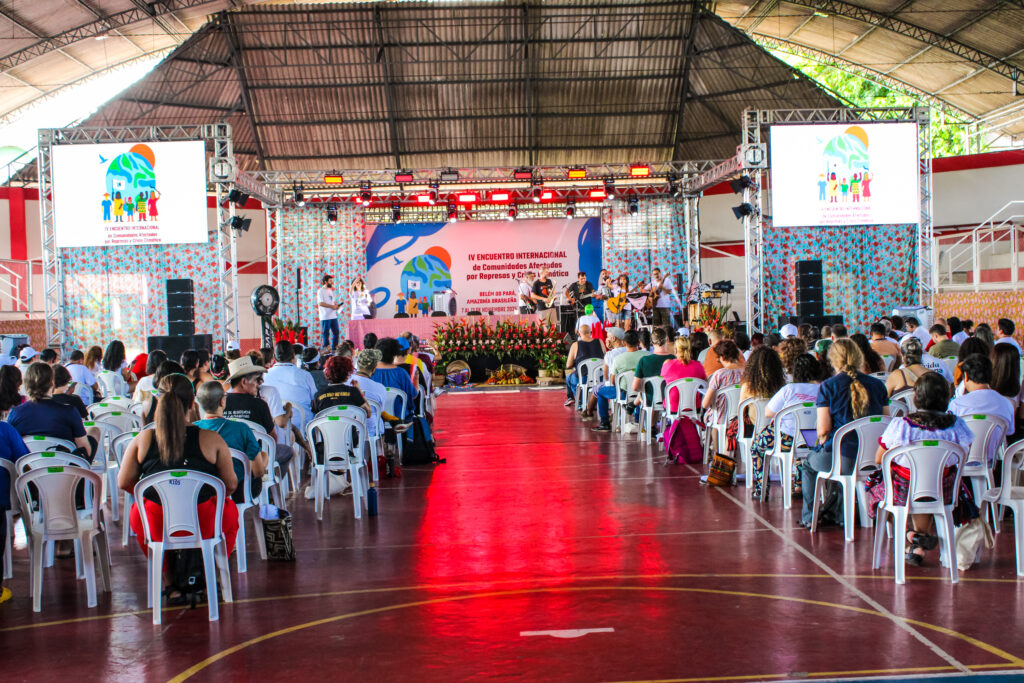
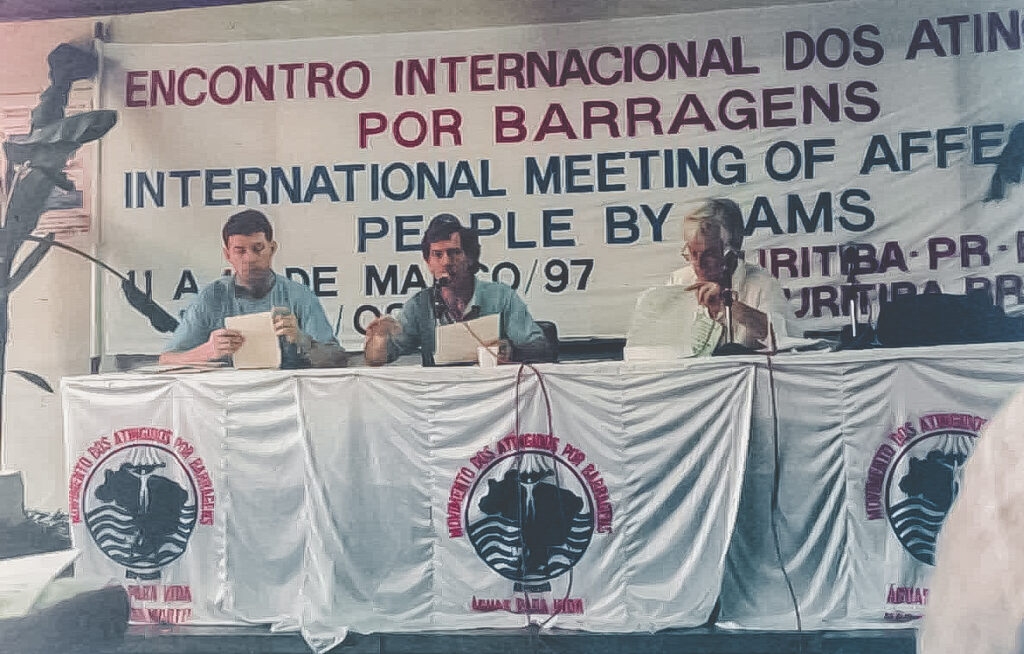
Luiz Dalla Costa: It was in Curitiba, in 1997. It was still a small event, less than 100 people, but symbolic. Representatives from Brazil, India, Chile, Argentina, networks from Europe, and even the United States participated. The main objective was to exchange experiences and understand that the problem of dams was global.
Two important decisions came out of it: to create March 14th as the International Day of Struggle Against Dams (in Brazil it had already been a national day since 1991, in memory of an assassinated leader) and to recognize that the struggles were similar on all continents—expelled peasants, threatened indigenous peoples, multinational companies profiting.
It was there that the seed of what would later become the Movimiento de Afectados por Represas (MAR) began to appear, still without that name.
Theoretical Base and Influence of the Church and Intellectuals
Was there influence from the Church and intellectuals in this process?
Luiz Dalla Costa: A lot. Bishops like Dom Demétrio Valentini, priests linked to the Pastoral Land Commission (CPT), Base Ecclesial Communities, and Liberation Theology participated actively. Many of the first meetings of those affected took place within parishes.
On the intellectual side, researchers like Carlos Walter Porto-Gonçalves, Carlos Vainer, Paulo Schilling, and other universities helped formulate theories about territory, energy, international capital, and the rights of peoples. This gave the movement a political and academic basis.
After the Curitiba meeting in 1997, how did this global network of those affected evolve?
Luiz Dalla Costa: The Curitiba meeting was important because it showed that the struggles were similar all over the world. After that, two fronts emerged: to continue strengthening the MAB in Brazil and to expand international ties. Between the late 1990s and early 2000s, we began to participate in debates at the UN, the World Bank, in Germany, the USA, and India, denouncing violations and pressing against dam financing.
Second International Meeting—Thailand, 2003
And the second international meeting—how was it?
Luiz Dalla Costa: Luiz Dalla Costa: It happened in 2003, in Thailand, in a community called Rasi Salai, in the Mekong River region. There, the populations were resisting dams, very similar to our struggles. It was a larger meeting than the one in Curitiba: more countries, more movements from Asia, Africa, Latin America, and Europe.
The spirit was different from the first. In Curitiba, it was still more of a “let’s get to know each other” kind of thing. In Thailand, there was already a deeper analysis: The impact of dams is global; the problem is linked to neoliberalism, privatization of water, and energy; the struggle needed to be articulated among the countries of the Global South. There, the idea of international solidarity and marking March 14th as an International Day of Struggle was strengthened, but it was still a network, not a movement.
Historical Change and Contradictions
This meeting took place at the beginning of progressive governments in Latin America, right?
Luiz Dalla Costa: Exactly. It was 2003: the beginning of Lula’s government in Brazil – Evo Morales wasn’t in power yet – but Chávez was in Venezuela, and there were strong movements in Bolivia, Ecuador, and Argentina after the 2001 crisis. At the same time, we were still under the effects of 1990s neoliberalism (privatizations, IMF, external debt). Therefore, there was tension: on one side, hope with popular governments; on the other, companies and banks pushing for large-scale projects.
And when did the realization arise that more than just meetings were needed? That a movement was necessary?
This awareness began to emerge between 2003 and 2010.
We realized that if we go home after each meeting and nothing is structured, that’s not a movement. It’s just networking. And the companies continued to advance, with even more force – Odebrecht, Camargo Corrêa, Engevix, Asian construction companies… So, either we organize ourselves permanently, or we just react. But the real turning point came at the Third International Meeting – Temacapulín, Mexico, 2010.
Third International Meeting—Mexico, 2010: A Turning Point
What happened there to change everything?
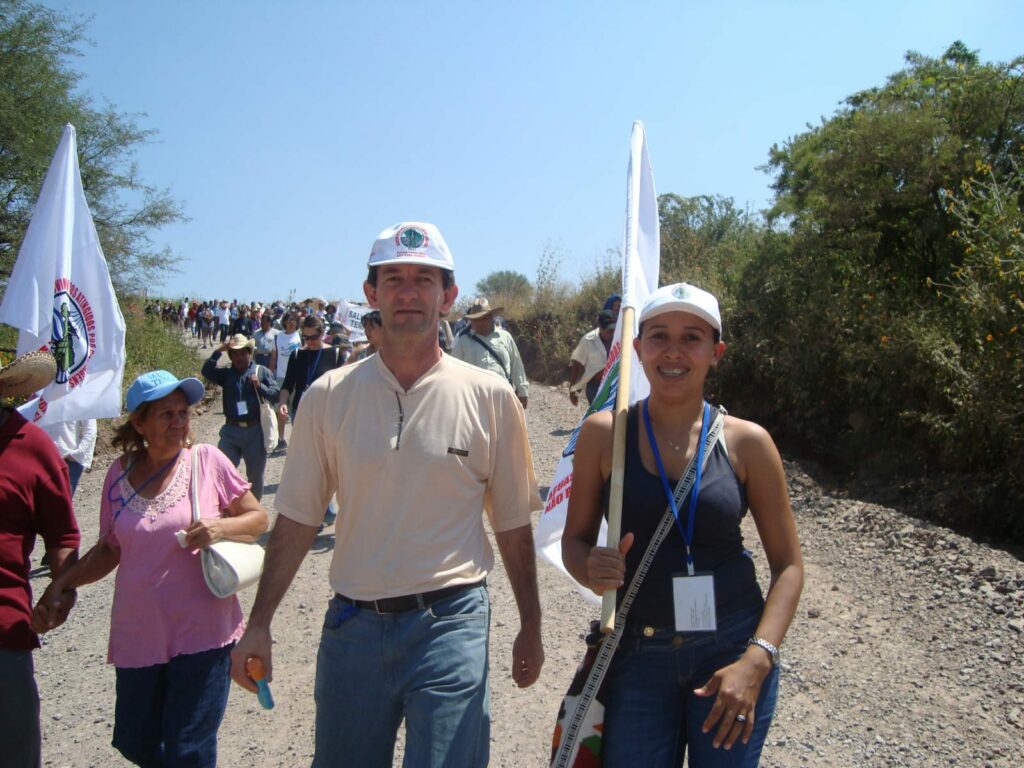
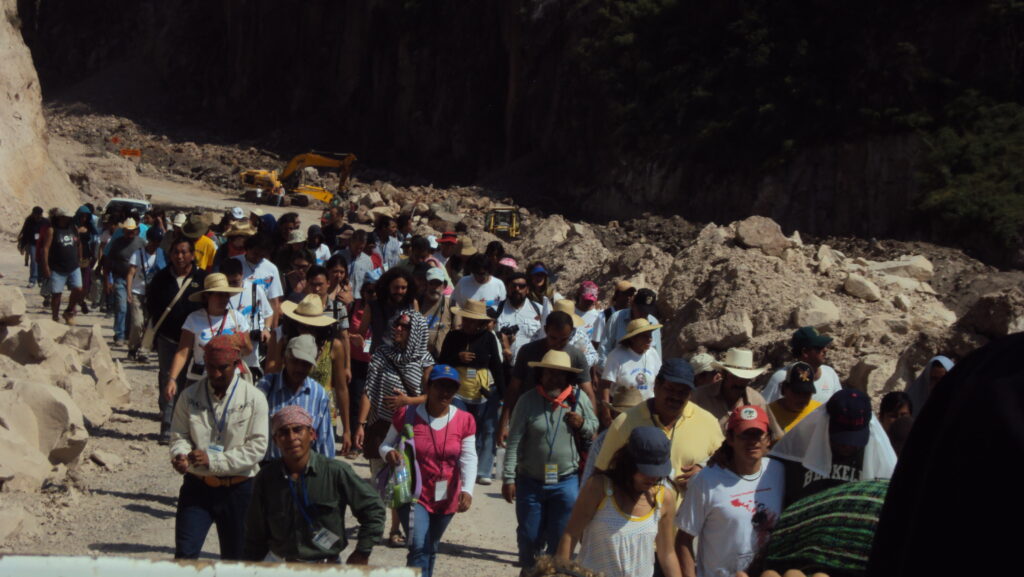
Luiz Dalla Costa: This meeting was different from the location itself. It took place in Temacapulín, a small town in Mexico that was to be flooded by the El Zapotillo dam. The community was resisting. So, the meeting wasn’t just about debate; it was within a territory in struggle.
Two major events happened: the determination of “end of the network, beginning of a movement.” Many were already saying: it’s not enough to denounce from time to time. We need a permanent Latin American movement, with training, coordination, and a political plan; direct action against the dam. We stopped the meeting and went to the construction site. We entered the site, even with repression. The message was: “the world is watching Temacapulín.” It was there that we began to say clearly: “It has to become a movement, not just a meeting.”
And was there already talk of a name, of a structure?
Luiz Dalla Costa: Not yet as MAR formally, but it was there that the decision was made to organize a long-term process. We came up with three main resolutions: to create continental training processes, not just events; to set up a provisional Latin American coordination; and to build a movement of affected people in Latin America, with a base, symbols, principles, and a strategy for struggle.
How MAR was born: from political decision to the construction of a continental movement
At the Mexico meeting (2010), the idea arose to go beyond networks and build a continental movement. What happened after that? How did this decision become concrete practice?
Luiz Dalla Costa: After Temacapulín, we understood: “If we want a movement, we have to organize, train people and create a structure.” Starting in 2010, we began a slow, patient, six-year process to build what is now called MAR — Movimiento de Afectados por Represas (Movement of People Affected by Dams). It wasn’t something launched overnight. We decided: before announcing any movement, we would build a base, train leaders, visit territories, and understand the reality of each country.
How did this training process work?
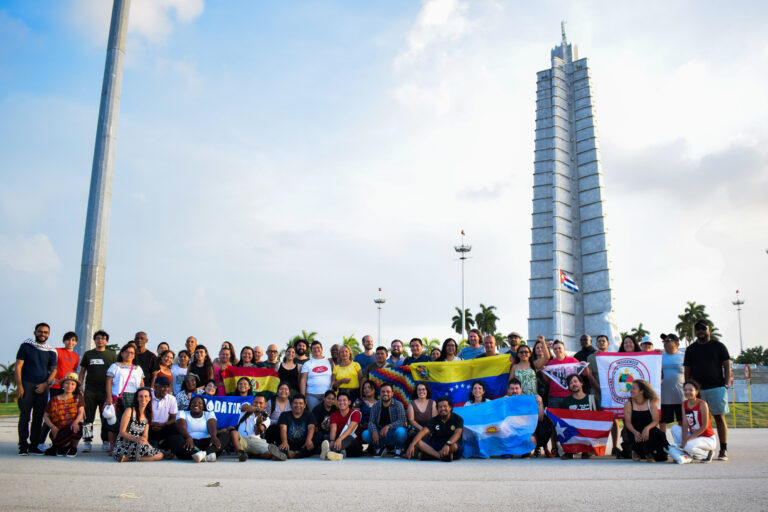
Luiz Dalla Costa: A method was created. We called it the “School of Political Formation in Latin American Reality.” It had two parts in each country: Theoretical and political study – history of energy in Latin America, the role of hydroelectric dams, imperialism, the neoliberal model, indigenous peoples, external debt, water governance; Territorial experience – visiting the affected communities in each country, participating in assemblies, fishing, walking, listening to stories, sleeping in the homes of families. This training took place in Colombia, Guatemala, Mexico, Brazil, and Cuba. In each country, we stayed between seven and ten days.
And the organization? Did you form a coordination team?
Luiz Dalla Costa: Yes. At the end of the first stage of training, in 2012, we created a Provisional Continental Coordination. Still without the official name MAR, but already committed to organizing the movement throughout Latin America, this coordination had representatives from: Brazil (MAB), Mexico (Temacapulín and indigenous movements), Colombia (Afro-Brazilian and peasant communities), Guatemala (Council of Mayan Peoples), Chile, El Salvador, Argentina, and Peru.
2016: The Official Birth of MAR
When did this construction officially become MAR?
Luiz Dalla Costa: In 2016, in Chapecó (SC), during a MAB meeting, we brought together leaders from these countries and launched MAR as a political construction. Not as a finished movement, but as a process. The name “MAR” came later. It means Movement of People Affected by Dams, but it also means “sea of people,” “sea of waters.” And today there is already discussion about changing it to Movement of People Affected by Energy and Climate, because those affected are not only those who lose their land to dams, but also those who lose everything due to floods, mining, drought, expensive energy, and extreme weather.
2019: The First Continental Meeting of MAR
And when does the movement publicly present itself as continental?
Luiz Dalla Costa: In 2019, in Panama, we held the First Continental Meeting of MAR. That time, with delegations from more than 15 countries. It was the first time the world officially heard: “There is a Latin American movement of affected people under construction.”
What is the difference between that initial international network and MAR?
A network is people who meet, sign a manifesto, and go home. A movement is something else: it has political principles, it has cadre training, it has symbols, a calendar of struggles, coordination and a popular base, it has comrades willing to fight and resist in the territory. MAR is that: it is not an NGO, it is not an internet campaign, it is not an event; it is organized people.
And today, how is MAR organized?
Luiz Dalla Costa: Today we have a Provisional Continental Coordination (representatives elected in the training schools); Training Schools in progress (3rd generation), now also involving Africa and Europe; activity in 17 countries in Latin America, each with its own reality; A common calendar of struggles – March 14th as the Continental and International Day of Struggle. And the dream now is bigger: to transform MAR into an international movement of those affected worldwide. The next meeting should be in Africa.
MAR Today: Climate and Energy Challenges and the Future of Latin American Struggle
And how does the theme of climate and energy enter the MAR movement?
Luiz Dalla Costa: It enters as a strategic center. Before, we only talked about dams. Today, we understand that the conflict is with the energy and climate model. The climate crisis multiplies those affected: floods, droughts, dam ruptures, expensive energy, entire populations being displaced.
Therefore, MAR is beginning to define itself not only as a movement against dams, but as a movement of those affected by the energy model and the climate crisis. This is profound, because it greatly expands who is affected.
Does MAR want to be only Latin American or something beyond that?
Luiz Dalla Costa: MAR is born Latin American, because we have a common history of colonization, dams, extractivism, and resistance. But the climate and energy crisis is global. Today we already have contacts with Africa, Asia, and Europe.
The dream is to reach what we call the International Movement of People Affected by Dams, Energy, and Climate. And this is not just talk; we are already starting training schools with People from Africa–people from Congo, South Africa–and movements from India.