PROFILE | Moñeka Dioro: a voice from the Pacific waters
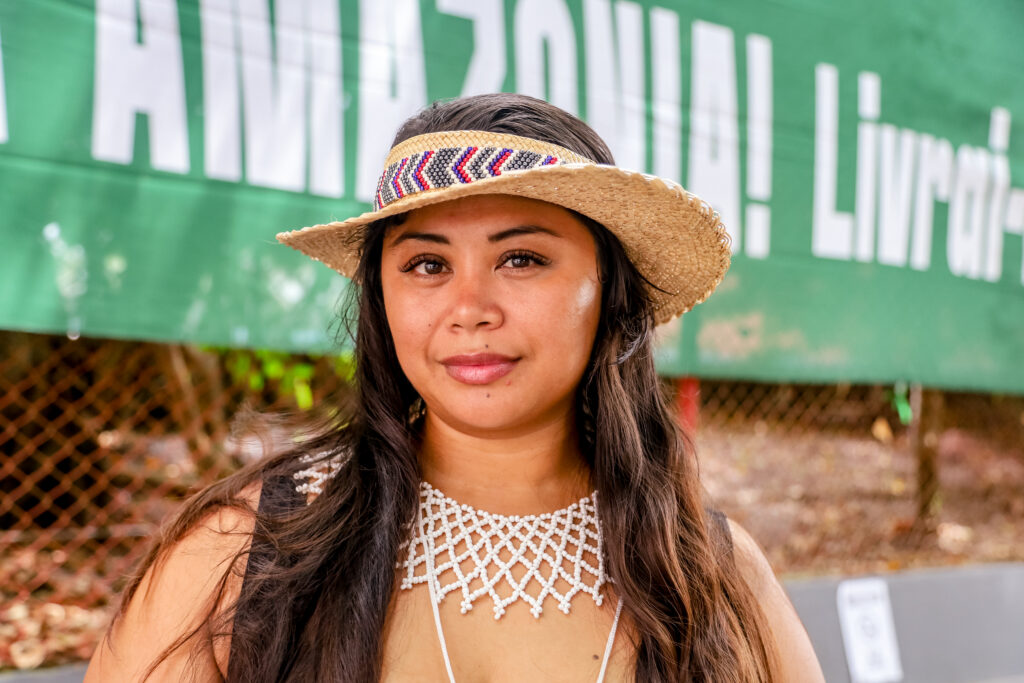
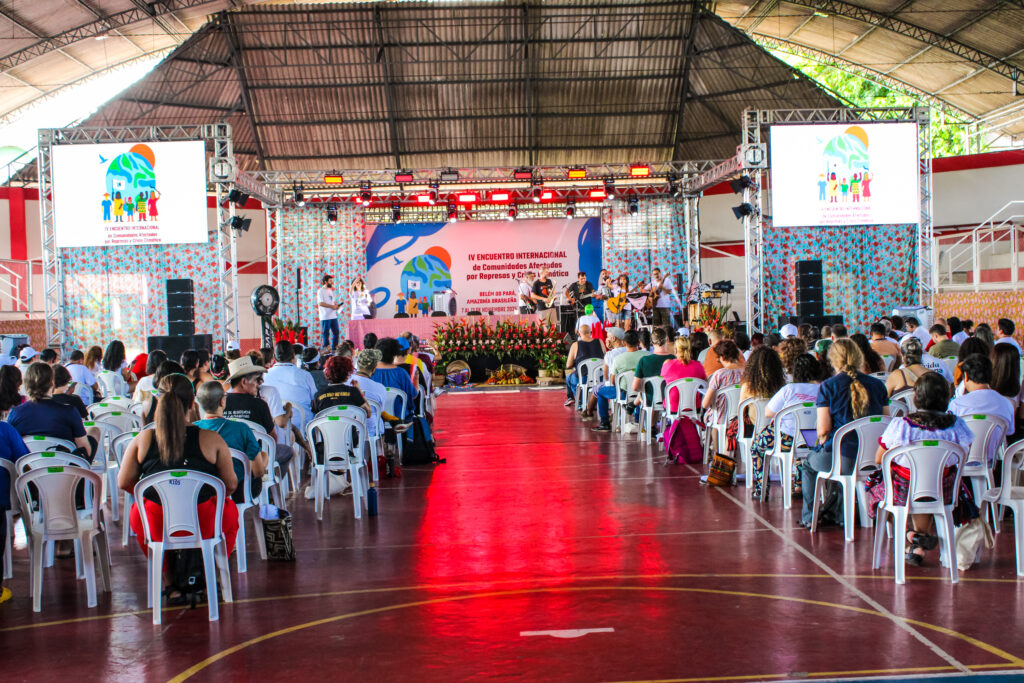
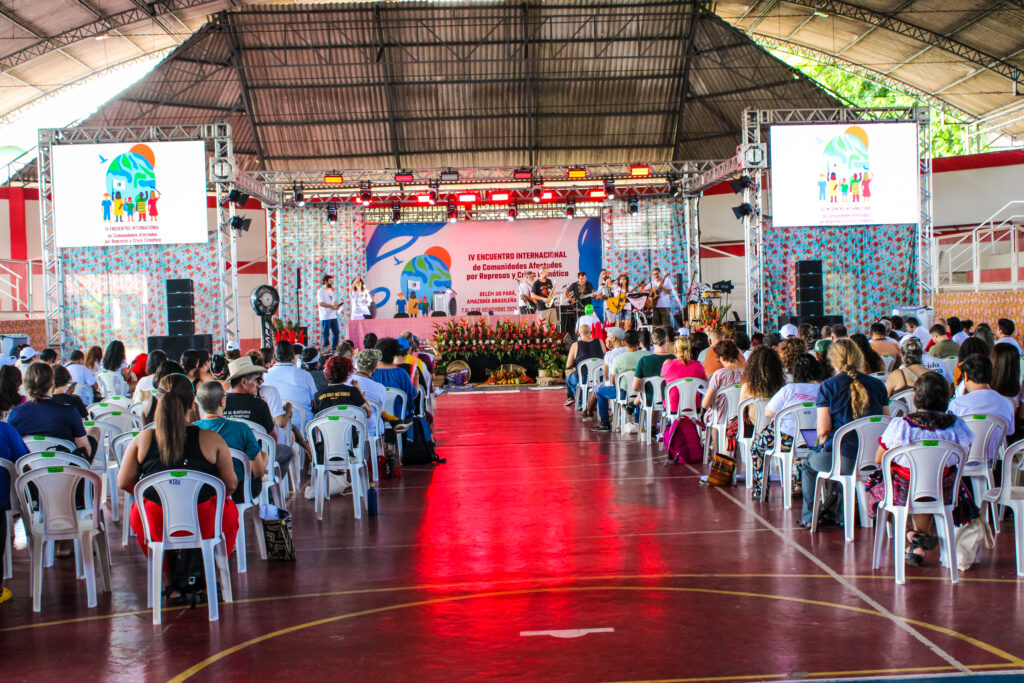
It took two days to travel from the Mariana Islands to Belém do Pará, Brazil. Moñeka Dioro arrived with her one-year-old son in her arms to participate in the IV International Meeting of Communities Affected by Dams and Climate Crisis, held between November 7 and 12 in the Amazon region, in parallel with the People’s Summit and COP 30.
Right at the beginning of the conversation, Moñeka sang a traditional song of her people—the Chamorro—from the Mariana Islands in Micronesia, which asks the ancestors for protection and wisdom. “I am a woman of the Chamorro people, first and foremost. We are the indigenous people of the Mariana Islands, a small archipelago in the middle of the Pacific, now occupied by the American Empire,” she said.
She is an educator, mother, and community organizer. Since 2019, she has been working with the Micronesia Climate Change Alliance (MCCA), which is part of the Global Grassroots Justice Alliance (GGJ). “It is a great honor to connect with the people of the Movement of People Affected by Dams (MAR) here in Brazil and to be the first woman from Oceania to participate in this International Meeting,” she said.
The islands where Moñeka comes from are small—the largest is about 100 km²—and, according to her, water is a sacred resource. “We are a people of the ocean. The fresh water we have is so important and precious because we need it to live. That is why protecting our small rivers and our aquifer is essential,” she said.
But the task is not simple. The Mariana Islands have been the scene of wars, occupations, and military training that have left deep scars. “Our land and waters are contaminated. We suffer from high levels of toxicity due to US weapons and military activities. Our population is sick; it is colonial violence that persists,” she denounced.
To address this reality, Moñeka and her organization develop education and self-sustainability projects. “We have held art exhibitions, awareness campaigns, and installed water collection and filtration systems so that our communities do not depend on utilities,” she explained.
Her activism began almost 20 years ago, driven by motherhood and her own family history. “I come from a lineage of healers and political leaders. I want to continue this tradition of serving my people; I fight for demilitarization, peace, and indigenous sovereignty for the Chamorro people,” says Moñeka.
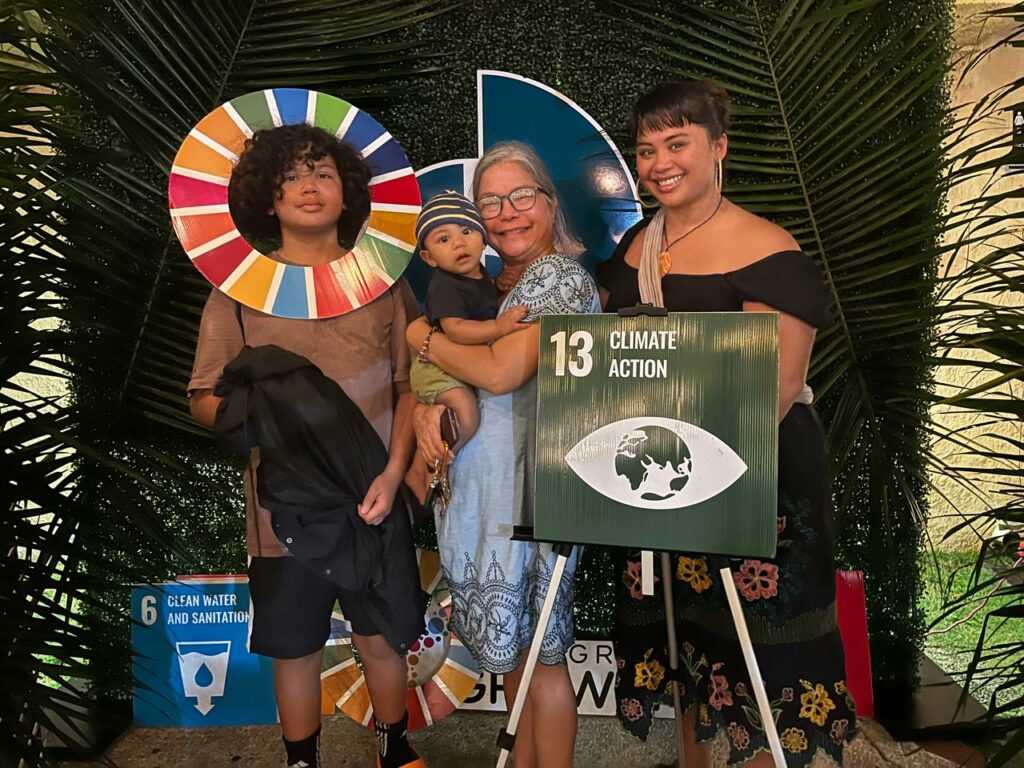
Moñeka is also a history teacher, studied archaeology and traditional medicine, and learned from ancestral navigators. For her, the knowledge of her ancestors is an essential guide in the face of the climate crisis. “Our culture is based on inafa maolek, or harmony. My ancestors knew how to live in balance with nature, and it is this balance that we need to recover.”
At the meeting in Belém, she found affinities with the struggles of peoples affected by dams around the world. “Hearing about experiences in Africa, Latin America, and Asia helped me understand that hydroelectric power, often presented as a solution, also destroys lives and territories,” she reflected. Despite the long journey and the difficulties of traveling with a small baby, Moñeka says she felt welcomed at the event. “It was beautiful to see how caring people were, the food, the Ciranda space for children. All of this gave me strength,” she said.
Back in the Pacific, she carries with her the desire to remain connected to the global struggle for climate justice and peace. “Our communities face nuclear contamination, rising sea levels, and the growing militarization of the Asia-Pacific. We need to be vigilant and call for peace in the world. If war becomes inevitable, it will be impossible to protect Mother Earth,” she warned.
For Moñeka, the strength of peoples lies in maintaining hope and love for life. “I come from a people who have learned to care for one another. On small islands, where water and food are scarce, we manage to ensure that everyone is fed and that there is abundance for future generations. That is true security,” she said.
At the end of the interview, she recalled the meaning of the song with which she began the conversation: “It asks our ancestors to guide and protect us. I hope we can be the good ancestors our children need us to be.”