Leaders from different countries discuss policies to protect affected communities throughout the world
By Camila Fróis / MAB, Rafael Zan / MAB
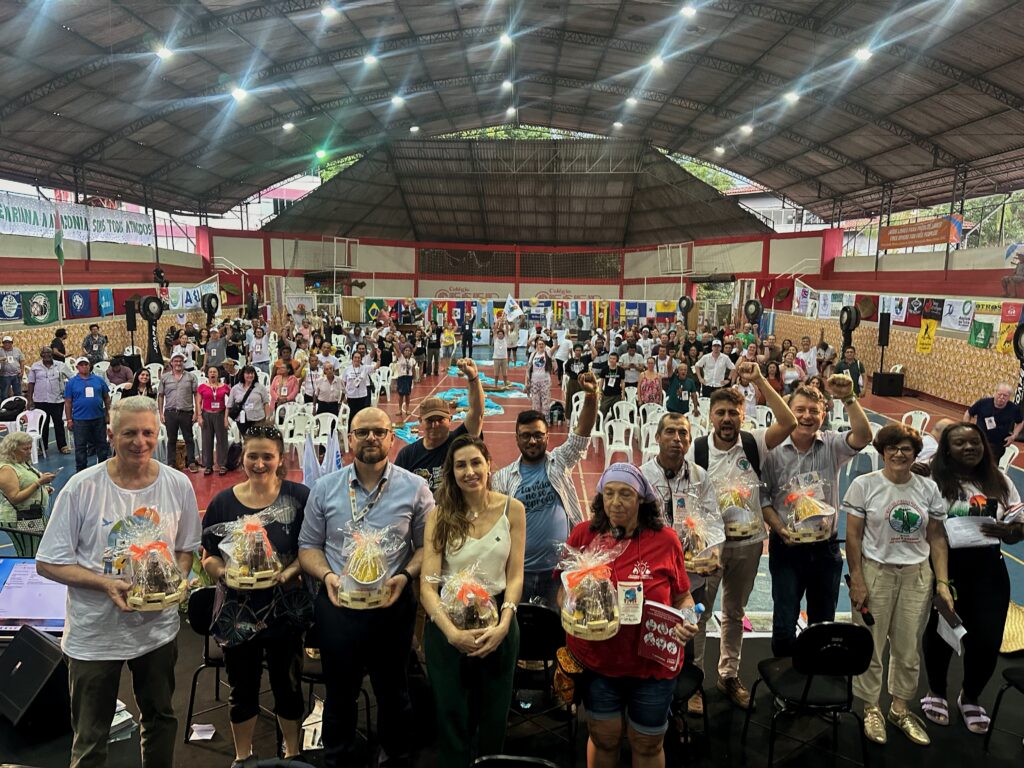
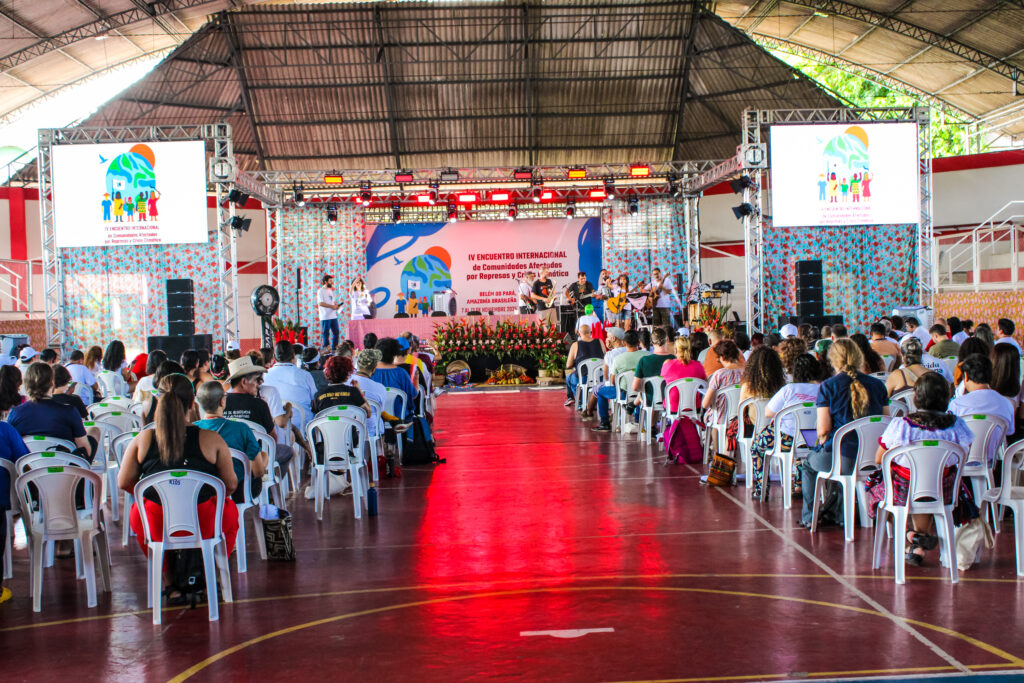
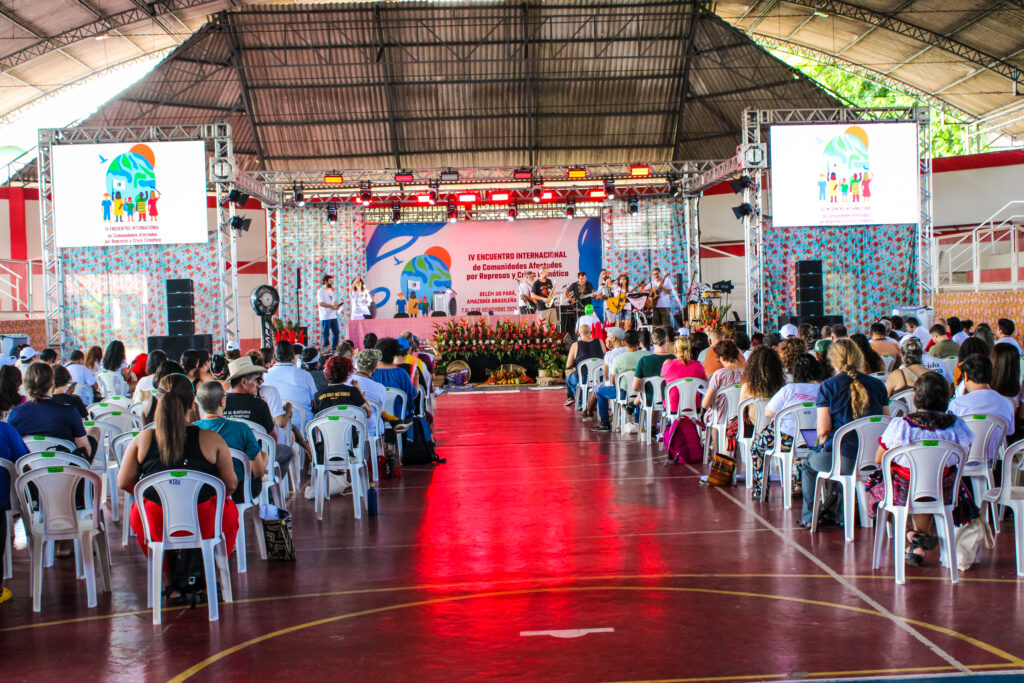
On the afternoon of Monday (November 10), the first official day of COP 30, while global leaders opened the climate conference amidst negotiations with large agribusiness and energy sector corporations, the IV International Meeting of People Affected by Dams and the Climate Crisis brought together representatives of communities that experience the direct impacts of these same companies and that are often excluded from the official negotiation tables.
Promoted by the Movimiento de Afectados por Represas (MAR) and the Movimento dos Atingidos por Barragens (MAB), the meeting precedes the People’s Summit and seeks to strengthen the articulation between leaders from five continents who work in defense of the rights of those affected.
Popular participation and socio-environmental justice
The panel included representatives from Brazil, Cuba, Colombia, Mexico, and Canada. At the beginning of the panel, Minister Macaé Evaristo highlighted the importance of strengthening popular participation and the development of public policies that address the violations caused by large-scale projects. She recalled that the federal government has sought to expand spaces for listening and social participation, especially in cases of large-scale environmental crimes, such as the collapse of the Mariana dam (MG). For the minister, ensuring that communities participate in decisions and reparation processes is an essential condition for justice to be served.
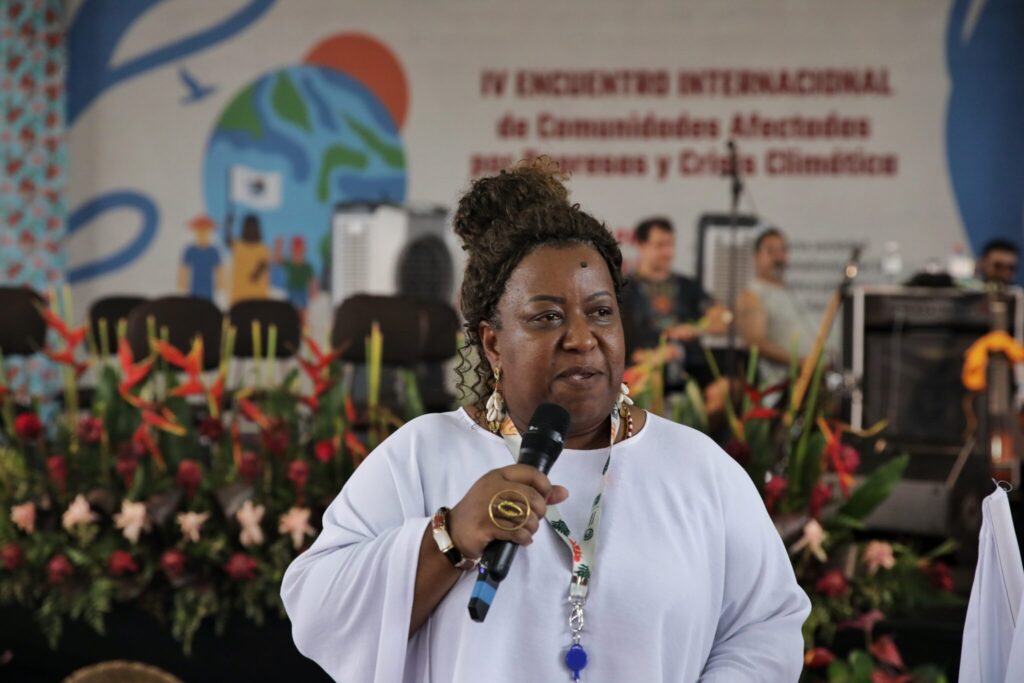
“This meeting is very important so that we can also globalize the struggle. This is fundamental. The Brazilian government has been active, not only monitoring, for example, the Mariana dam disaster agreement, in which the federal government played a very important role. After the agreement, an essential aspect for us is to guarantee popular participation. In this case, we have the Committee for Popular Participation, responsible for monitoring and implementing the recommendations of the agreement,” said the minister.
Evaristo also reinforced that the discussion about human rights and companies needs to gain centrality in national and international agendas, since environmental crimes are frequently committed by large transnational corporations. She stressed that, in the face of an economic model that concentrates power and profits, it is fundamental that states build accountability mechanisms, and that communities are heard before the installation of any enterprise.
“Today we are frequently working on reparations in very serious cases of environmental crimes, which could have been avoided if the communities had been heard and if there were effective mechanisms to control these activities. This debate about human rights and business is essential, because we still do not have, either in Brazil or within the UN, a consolidated framework on how to prevent these crimes and how to hold all actors involved in the production chain accountable,” said the minister.
PNAB: uma conquista histórica dos atingidos
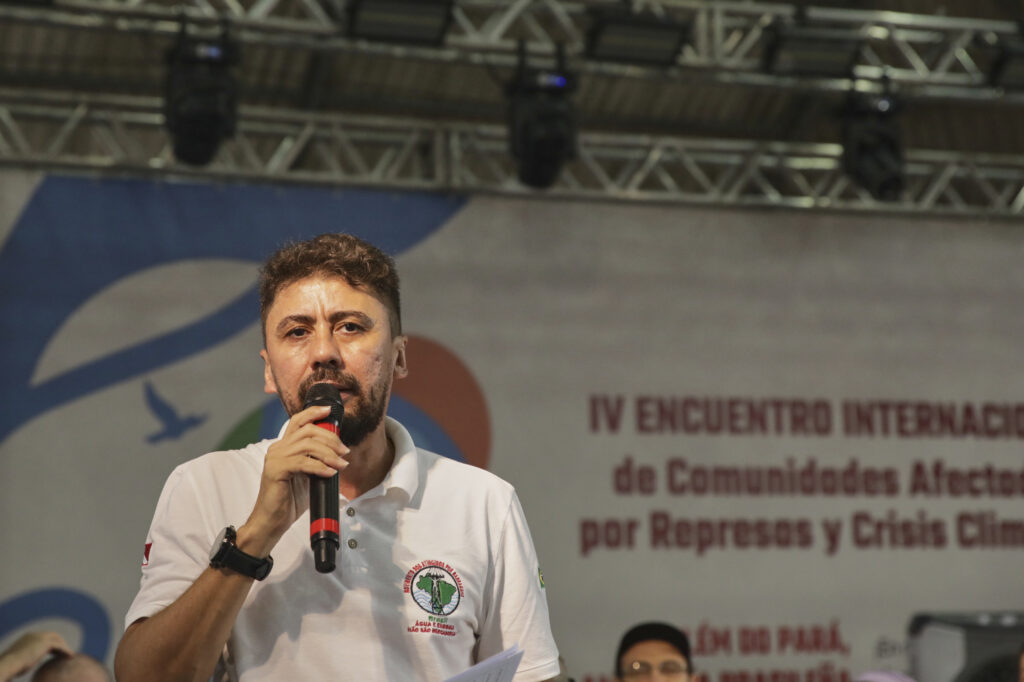
On behalf of the MAB (Movement of People Affected by Dams), Iury Paulino highlighted the historical and collective nature of the National Policy for the Rights of People Affected by Dams (PNAB), approved in Brazil after decades of popular mobilization. “The PNAB is the result of a history made of struggles, united hands, and stubborn hopes, a conquest of affected people that transformed pain into rights and resistance into law,” he stated.
For Paulino, the PNAB symbolizes more than a legal instrument: it represents the consecration of the collective strength of a people who resisted broken promises and silences imposed by economic power.
“The PNAB was born from the strength of those affected, who transformed suffering into organization and organization into victory. It is a landmark of dignity and collective courage that resonates throughout the world as a symbol of resistance and solidarity.”
Cuba and the Experience of Life Task
Juan Francisco Santos Estévez, director of the Martin Luther King Memorial Center, presented the Cuban experience in protecting communities from extreme weather events. He recalled that the country, frequently affected by hurricanes, cyclones, and rising sea levels, developed a national adaptation plan known as Tarea Vida (“Life Task” or State Plan to Confront Climate Change), launched in 2017.
The program structures actions for the resettlement of vulnerable coastal communities, the recovery of mangroves and ecosystems, and encourages the use of nature-based solutions.
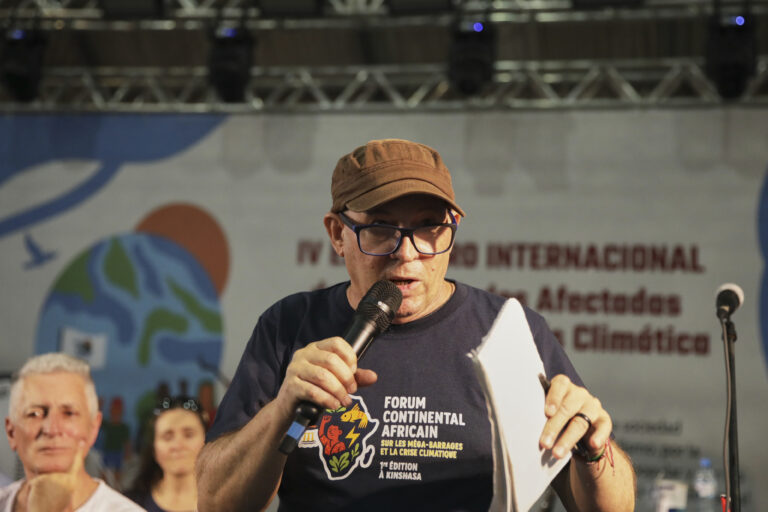
“Cuba also has 700 large dams and more than a thousand small barrages that have impacts on the world. What we want to highlight, however, is how we are organized to protect lives, even in the most serious tragedies, with actions built from social participation, and not in government cabinets,” he stated.
Also, the country strengthens the Civil Defense system, which includes early warnings, community mobilization and national preparation exercises, a territorially integrated adaptation model.
Colômbia: The Example of El Quimbo and Paths for Reparations
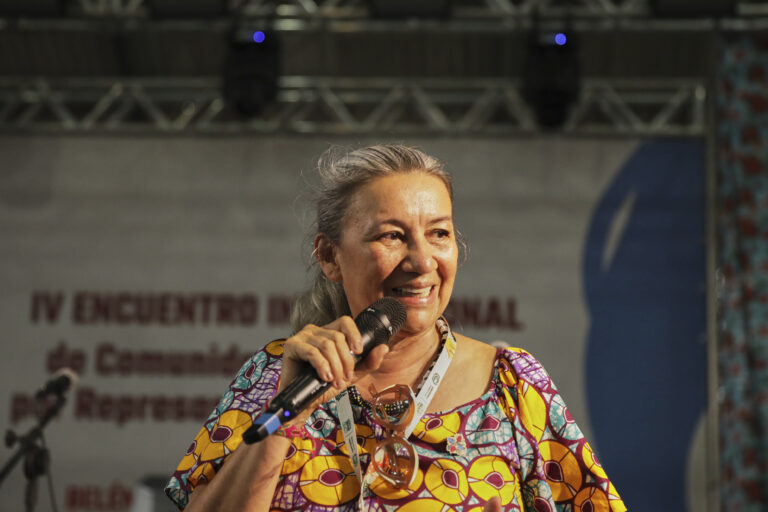
Tatiana Roa Avendaño, Vice Minister of Environmental Territorial Planning of the Ministry of Environment and Sustainable Development of Colombia, highlighted in her speech the social and environmental impacts caused by large hydroelectric projects:
“The dams meant eviction, displacement, death, loss of rivers and cultures, and this cannot continue to be romanticized under the discourse of development and clean energy.”
“You, in your territories, experienced what the construction of these mega-dams meant. The State, with it’s development model, failed the communities. Therefore, we opened real channels of dialogue, not to legitimize decisions already made, but to build paths collectively. In the case of the El Quimbo dam, we reached an agreement on five points, including the recognition of the communities’ right to their lands. Everything we achieved at this dialogue table was inspired by Brazil’s policy for affected communities,” concluded the Vice Minister.
The case of the El Quimbo dam, in the District of Huila (southern Colombia), is one of the most emblematic socio-environmental conflicts in the country. The power plant, built by the company Enel-Emgesa and inaugurated in 2015, caused the displacement of hundreds of peasant families, loss of productive areas, and serious impacts on the Magdalena River. After years of mobilization, the affected communities achieved dialogue with the Colombian government, resulting in reparation agreements and recognition of territorial rights.
A Struggle Against Energy Poverty in Spain
Dominga Lorenzo, from the Alliance Against Energy Poverty (APE) in Spain, stated that energy poverty is a reality for about 17% of the population, who often have their electricity cut off and face difficulties maintaining a suitable temperature at home during the colder months and paying their electricity, gas, or water bills. “Many households are forced to choose between paying their mortgage, bills, or maintaining adequate nutrition,” she said. According to her, the effects on physical and mental health are profound and varied. Meanwhile, large energy conglomerates increase their profits every year.
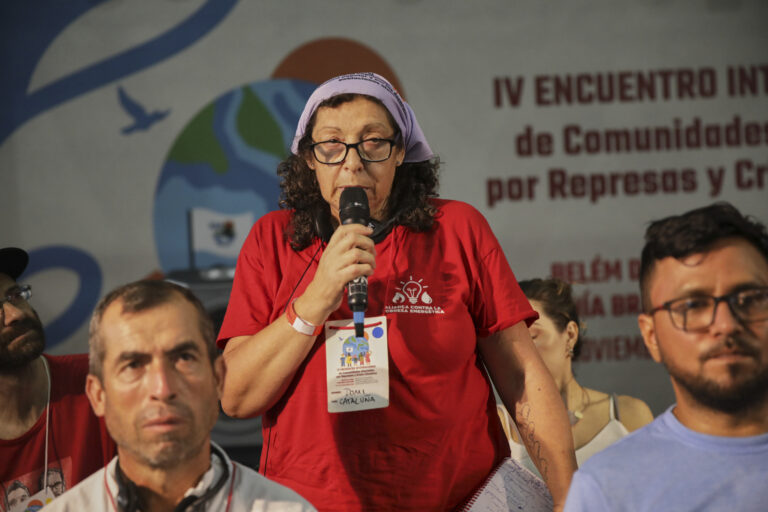
Therefore, the initiative she is part of fought to pass a law that guaranteed a reduction in the number of service cuts. “APE’s work has been to pressure public administrations and companies to apply the law for the benefit of the most vulnerable people. In 2021, debt forgiveness was achieved for more than 40,000 families. We are working to ensure that other companies also forgive debts and that, worldwide, regardless of each person’s housing situation, the right to basic services is guaranteed,” she stated.
How Will the Climate Agenda be Handled Moving Forward?
Closing the panel, Guilherme Franco, a researcher at Fiocruz, highlighted that COP 30 in Belém represents a central dispute over the meaning of the climate agenda.
“The Belém COP expresses a fundamental dispute: deciding whether the climate agenda will be treated as a merely economic and technological agenda or as a truly political agenda. We are living in a moment where not even science can fully explain the dimension of the extreme events we are witnessing,” he stated.
For Franco, it is necessary to build a committed and engaged science, capable of dialoguing with the territories and peoples most impacted by the climate crisis. “Society needs to build its own paths in articulation with science, a science that takes a stand and acts alongside those who suffer the most.”
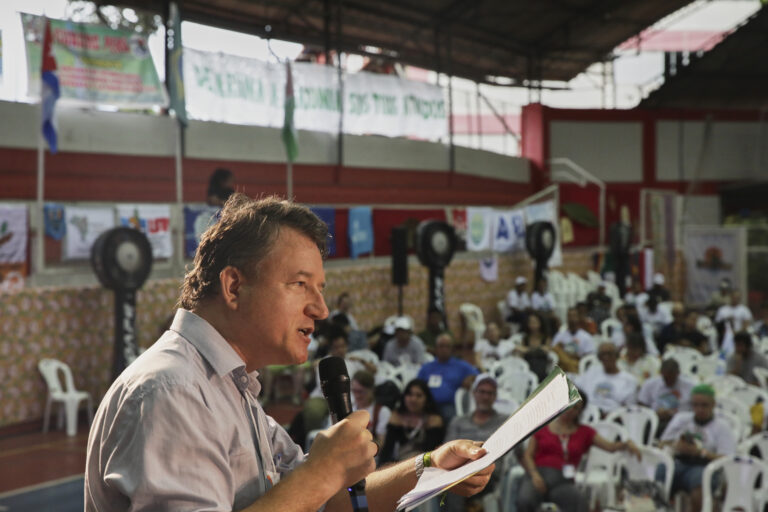
Leandro Scalabrin, a popular lawyer from MAB (Movement of People Affected by Dams), highlighted the importance of transforming the Brazilian experience into a global commitment. “We need laws that recognize those affected and hold companies accountable for violations. May each country carry forward these commitments with courage and hope. Brazil has shown that it is possible to transform pain into rights and resistance into public policy.”
In closing, the leaders reinforced the importance of internationalizing the struggle of those affected and ensuring that public policies incorporate the voice of communities in formulating responses to the climate crisis. The message was clear: without popular participation, there is no just transition or possible climate justice.